
System selection
Battery Cabinet vs Container BESS: How to Choose
Choose the enclosure format after power, usable energy, electrical boundary, site access and service strategy are defined—not from capacity labels alone.
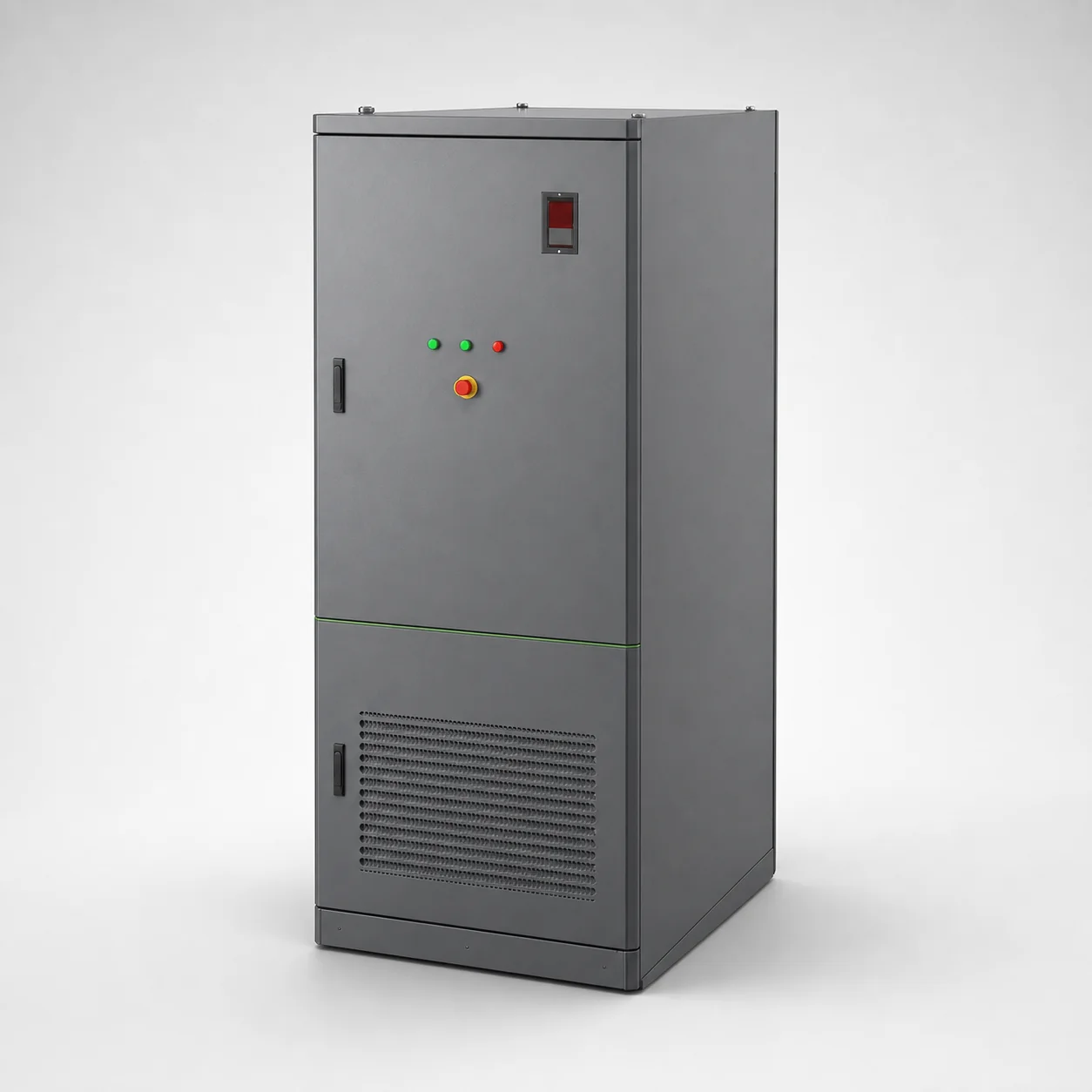
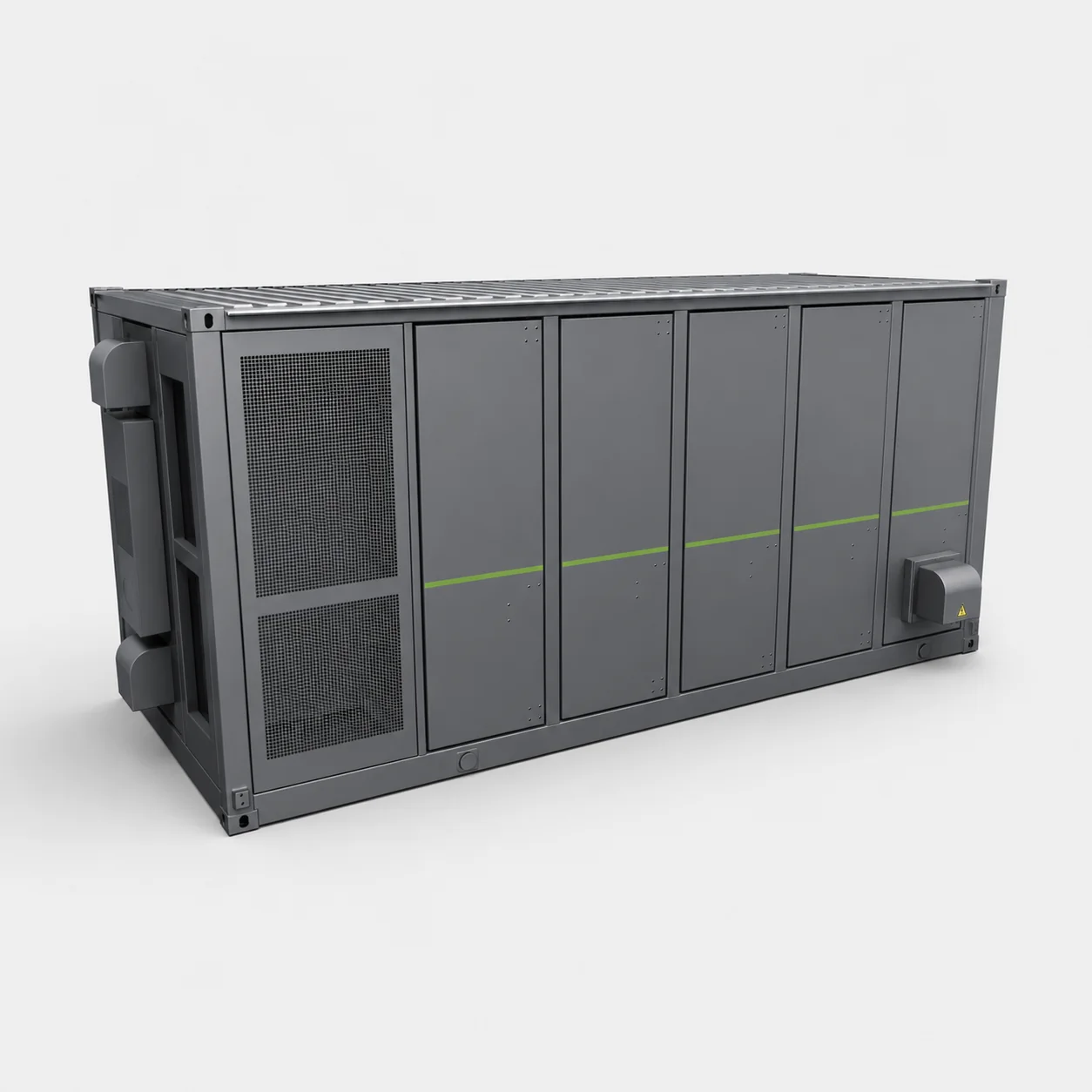
The short answer
A battery cabinet is usually the more direct starting point for a distributed C&I site that needs hundreds of kilowatts, a 400 V interface and repeatable modular expansion. A container BESS is usually the better starting point for a centralized megawatt-scale plant where higher energy, a 690 V PCS stage, medium-voltage integration and heavy-lift logistics are already part of the project. Neither format is automatically safer, cheaper or faster: the correct choice is the one that minimizes unresolved project interfaces.
Side-by-side
Battery cabinet vs container BESS
The enclosure changes how equipment is grouped, transported, installed and serviced. It does not replace the engineering work needed to define usable energy, power, operating mode and the point of connection.
| Decision area | Battery cabinet | Container BESS |
|---|---|---|
| Typical project shape | Distributed or phased C&I installations; one or more compact outdoor units | Centralized, higher-energy plant with dedicated BESS area and coordinated balance of system |
| Documented starting range | 105 kW / 233 kWh, 125 kW / 261.2 kWh and 250 kW / 522.5 kWh | 1.25 MW / 3.354 MWh, 1.725 MW / 5.016 MWh and 2.5 MW / 5.016 MWh |
| AC boundary | Documented cabinet platforms use a 400 V AC interface | Documented container platforms use a 690 V PCS stage; project step-up is resolved separately |
| Expansion | Add coordinated units when the transformer, switchgear, protection and EMS support parallel operation | Expand by complete container/PCS blocks after layout, MV collection and protection studies |
| Site and delivery | Smaller footprint per unit and lighter lifts, but more field terminations across multiple units | Heavy transport and lifting, larger clearances and foundations, but a consolidated equipment block |
| Service approach | Distributed service points; a fault may be isolated to one cabinet if the design supports it | Central service zone; internal access, egress, HVAC and fire interfaces need project review |
| Best screening question | Can the site meet the duty with a small number of repeatable 400 V modules? | Is the project already large enough to justify a central 690 V/MV architecture and heavy logistics? |
Cabinet fit
Choose a battery cabinet when modularity reduces project risk
A cabinet is a strong starting point when the storage plant sits close to an existing low-voltage distribution board, available land is fragmented, or capacity will be added in phases. The documented cabinet platforms integrate the battery string, bidirectional PCS, BMS, EMS, liquid cooling and fire suppression in an IP54 outdoor enclosure. That reduces the number of major equipment packages that must be matched before a budgetary configuration can be reviewed.
Cabinets also let a buyer distribute power near different loads instead of building one central battery yard. This can be useful across factories, commercial campuses, EV charging sites and solar self-consumption projects. The trade-off is repetition: every added cabinet needs cable routing, isolation, communications, protection coordination, access and a clear maintenance boundary.
- The required power is in the documented hundreds-of-kilowatts range or can be divided into practical blocks.
- The site has a 400 V three-phase point of connection or a clearly defined transformer boundary.
- Phased expansion, distributed placement or fault isolation by unit has real operational value.
- Delivery access favors smaller lifts and the site can support multiple foundations and cable routes.
Container fit
Choose a container BESS when the project is already a central power plant
A container becomes the more coherent starting point when energy moves into the multi-megawatt-hour range and the project already needs a dedicated BESS area, transformer package, medium-voltage switchgear, protection studies and heavy transport planning. The enclosure consolidates many battery strings, thermal systems, control layers and safety interfaces into one larger block.
The documented container configurations pair 3.354 MWh or 5.016 MWh battery platforms with 1.25 MW, 1.725 MW or 2.5 MW PCS stages. Their energy-to-power ratios differ, so “container” still does not define duration. A 2.5 MW / 5.016 MWh configuration is approximately two-hour-class at rated values, while 1.725 MW / 5.016 MWh is closer to three-hour-class. Guaranteed usable duration must still account for SOC limits, auxiliary loads, efficiency, temperature, ageing and reserve.
- The required capacity is most naturally expressed in megawatt and multi-megawatt-hour blocks.
- The point of connection already requires a coordinated 690 V PCS stage and project step-up transformer.
- The site can accept the transport route, crane plan, foundation loading and service clearances.
- A central control, fire, HVAC and maintenance strategy is preferable to many distributed cabinets.
Engineering boundary
Five checks decide more than enclosure format
1. Size power and usable energy separately
Start with the interval load or dispatch profile. PCS power in kW must cover the required instantaneous duty; usable battery energy in kWh must cover the duration after operating reserves and losses. Dividing nameplate kWh by PCS kW gives a screening duration, not a warranty promise.
2. Resolve the AC and transformer boundary
A 400 V cabinet may integrate cleanly with a low-voltage site, but current rises quickly as power increases. A 690 V container PCS can reduce current at the same power, yet it normally introduces a step-up transformer and medium-voltage scope. Compare cable length, switchgear, fault level, protection and transformer losses—not only the battery enclosure.
3. Treat thermal and fire systems as project interfaces
Both documented formats use liquid cooling and include detection/suppression equipment, but site approvals depend on the approved design basis, local code, spacing, alarm logic, emergency stop, ventilation and fire-service access. Request drawings, cause-and-effect logic, component data and factory test evidence.
4. Plan transport, lifting and maintainability
A compact cabinet is not automatically easy to place, and a container is not automatically plug-and-play. Confirm weights, lifting points, route restrictions, unloading responsibility, drainage, solar exposure, access doors, replacement paths and safe working clearances. The maintenance plan should show which equipment can be isolated without shutting down the whole plant.
5. Compare identical commercial boundaries
Mark battery, PCS, EMS, transformer, switchgear, protection, SCADA, civil work, cabling, shipping, FAT, commissioning and training as included, excluded, optional or buyer-supplied. A cabinet quote and a container quote are only comparable after these boundaries match.
Selection framework
Use two filters before requesting a configuration
Cabinet-first screen
- 400 V project boundary
- Distributed or phased siting
- Hundreds-of-kW power block
- Smaller lifts and multiple service points
- Modular expansion has operational value
Container-first screen
- Central megawatt-scale plant
- Multi-MWh energy block
- 690 V PCS and MV step-up scope
- Heavy transport and crane access available
- Centralized service and safety strategy
If the project matches both filters, request two normalized concepts using the same load data, usable-energy basis, transformer boundary, site layout and commissioning scope. Compare total installed interfaces and lifecycle serviceability rather than enclosure price alone.
Documented examples
Compare real starting platforms
105 kW / 233 kWh
Integrated LFP cabinet with 105 kW bidirectional PCS, 400 V AC interface, liquid cooling, IP54 enclosure and approximately 2.22 hours of rated energy-to-power ratio.
View cabinet configuration →1.25 MW / 3.354 MWh
Nine-string LFP container with a 690 V PCS stage and a project-level step-up interface; approximately 2.68 hours by rated energy-to-power ratio.
View container configuration →These values are documented product starting points, not a project guarantee. Final procurement must use the approved project datasheet, single-line diagram, drawings, warranty conditions and acceptance procedure.
RFQ inputs
Send the same data for either format
A useful supplier comparison begins with one controlled input pack. Include twelve months of interval load data where available, target power and usable duration, grid voltage, transformer rating, single-line diagram, fault level, ambient range, site layout, delivery access, operating mode, critical loads, PV or generator interfaces, communications, certification needs and FAT expectations.
Use the industrial BESS quotation scope to record inclusions and exclusions. For early site work, the C&I ESS site survey checklist prevents logistics and electrical assumptions from being hidden until final quotation.
Buyer questions
Frequently asked questions
Is a container BESS always more powerful than a battery cabinet?
No. Enclosure format does not define power by itself. Compare the approved PCS rating, usable energy, voltage, overload duty and number of parallel units for the actual project.
Can several battery cabinets be installed in parallel?
Yes, when the electrical design, EMS coordination, protection, communications, clearances and site transformer are engineered for the combined system.
Does a container BESS connect directly to a medium-voltage bus?
Not necessarily. The documented container platforms use a 690 V PCS stage and require a coordinated step-up transformer, switchgear, protection and grounding design for a 10 kV project-side interface.
Which option is faster to install?
A cabinet can simplify small distributed installations, while a container can reduce field assembly for a large central plant. Transport, lifting, foundations, cable routes, inspections and commissioning determine the real schedule.
What should be included in an RFQ?
Provide the load or dispatch profile, target power and usable duration, point-of-connection voltage, single-line diagram, ambient conditions, layout, access limits, operating mode, delivery destination and acceptance evidence.
Choose the format after defining the project.
Power, usable energy, voltage, access and responsibility scope turn an enclosure choice into an engineered BESS concept.