
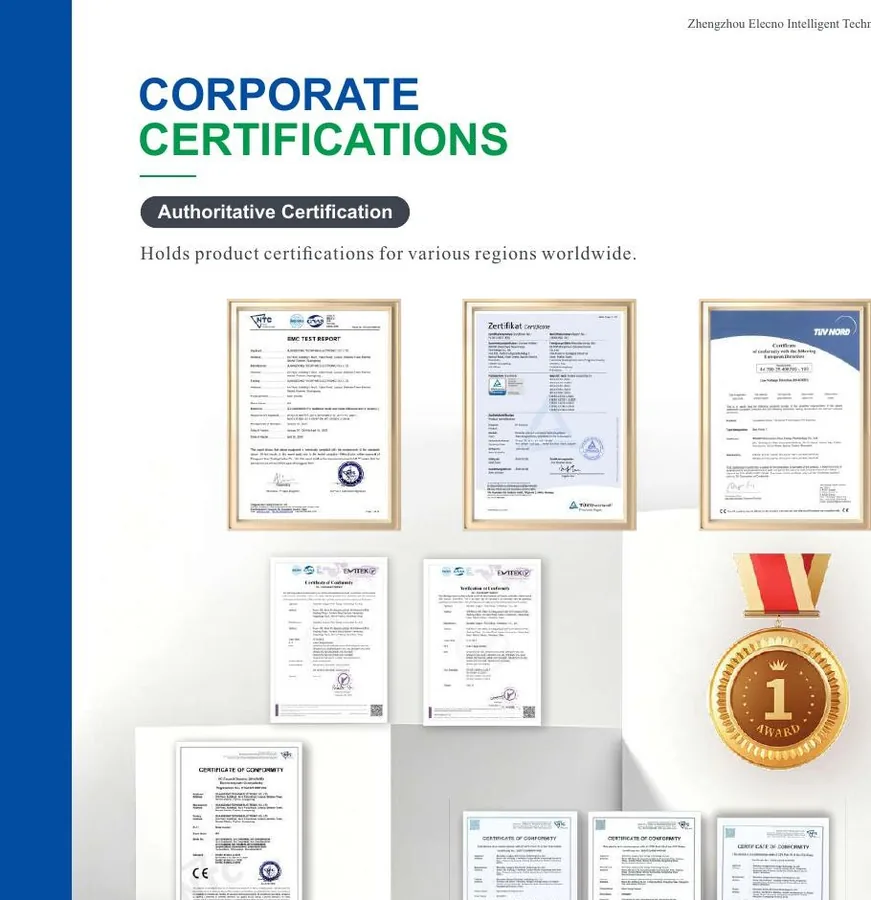
Supplier qualification
Qualify the supplier with factory and project evidence.
Separate manufacturing, system integration, documentation, warranty and after-sales responsibility before deposit and final payment.
A C&I ESS supplier should be qualified by evidence, not only by price or brochure. Buyers need to know who is responsible for cabinet assembly, PCS integration, EMS settings, FAT records, warranty and after-sales support.
Use this checklist before comparing an outdoor cabinet or BESS container quote.
Supplier responsibility map
Separate manufacturing, system integration and project support. A good supplier can explain which team owns battery build, PCS settings, EMS logic, cooling design, FAT evidence, export documents and warranty response.
Qualification checklist
| Check item | What to request | Why it matters |
|---|---|---|
| Company scope | Factory address, production process, test equipment and responsibility chart. | Shows whether the supplier is manufacturer, integrator or trader. |
| Battery evidence | Cell data, BMS settings, inspection records and serial traceability. | Connects capacity with delivered product. |
| PCS/EMS scope | PCS model, EMS functions, communication settings and boundary. | Defines integration responsibility. |
| FAT evidence | Test checklist, photos, videos and serial-number record. | Confirms the exact system before shipment. |
| Warranty | Terms, exclusions, maintenance evidence and support process. | Clarifies long-term responsibility. |
Next buyer step
If site data is not ready, complete the site survey checklist. For power conversion, review PCS and battery matching.
How to separate manufacturer, integrator and reseller roles
A supplier can be useful in different ways, but the buyer should understand the role. A manufacturer may control cabinet build and testing. An integrator may combine battery, PCS, EMS and cooling from several partners. A reseller may coordinate documents and communication. Each model can work, but responsibility must be clear.
Ask who owns the final FAT record, who answers PCS and EMS questions, who provides warranty support and who handles replacement parts. If those answers come from different companies, the buyer should know the escalation path before order confirmation.
Qualification should also include document behavior. Strong suppliers respond with organized drawings, test records, document lists and clear exclusions. Weak suppliers often provide only marketing files and delay technical evidence until after payment pressure begins.
Supplier evidence to keep on file
Keep a copy of factory information, cabinet or container layout, PCS scope, BMS notes, cooling description, FAT sample, warranty terms, export document list and all written responsibility notes. These files protect the buyer when there is a disagreement later.
Quotation review notes for supplier qualification
A supplier qualification review should not end with a company profile. The buyer should ask how the supplier handles engineering questions, document delivery, FAT evidence, export packaging, warranty claims and spare parts. These operational details often show more than a brochure.
If a supplier refuses to share sample FAT records, layout examples or warranty exclusions, treat that as a risk signal. Sensitive customer information can be removed, but the supplier should still be able to show how its evidence process works.
| Quote item | Question to ask | Risk if unclear |
|---|---|---|
| Included scope | Which battery, PCS, EMS, cooling, fire and document items are included? | The buyer may compare a complete system with a partial supply. |
| Responsibility | Who supports setup, troubleshooting, spare parts and warranty claims? | Problems can move between supplier, integrator and installer. |
| Evidence timing | Which documents are available before deposit, before shipment and after commissioning? | Important evidence may arrive too late to influence the purchase decision. |
FAQ
Is a trader always bad?
No. But the buyer should know who actually manufactures, tests and supports the system.
What is the most useful evidence?
A sample FAT record and responsibility map are often more useful than a brochure.
Should warranty be reviewed before order?
Yes. Warranty exclusions and required maintenance records matter after installation.
Can one supplier provide cabinet and PCS?
Some can, but the responsibility boundary must be clear.
What should I ask before paying balance?
Ask for FAT evidence, serial-number photos, packing evidence and final document list.
Supplier evidence
Ask for configuration-specific document control.
Supplier qualification should prove that the offered model, revision, bill of materials and factory tests all refer to the same configuration. Use a BESS conformity assessment matrix to map destination requirements, offered-model identity and supporting evidence before approval.
| Evidence group | Verify | Keep in the order file |
|---|---|---|
| Product identity | Model, chemistry, kW/kWh, serial scheme | Approved project datasheet |
| Engineering | Single-line, layout, cable and protocol boundaries | Revision-controlled drawings |
| Safety and environment | IP54/C3 basis, liquid cooling, detection and suppression | Component records and cause/effect |
| Factory evidence | Startup, charge/discharge, alarms, E-stop, communications | Signed FAT and photo register |
| Handover | Packing, manuals, parameter files, commissioning and warranty | Document index and responsibility matrix |
Related buyer guides
Continue with the next engineering decision.
Use the guide that matches the open sizing, electrical, safety or quotation question.
Commercial battery storage cost
Separate battery, PCS, enclosure, electrical BOS, delivery and commissioning cost drivers.
Read guideBESS fire protection documents
Check design basis, detection, suppression, alarms, emergency stop and FAT evidence.
Read guideLoad profile for a BESS quotation
Prepare interval demand, tariffs, PV, generators, critical loads and operating schedules.
Read guideContinue the project review
Connect the next decision.
Use the related page that matches the next equipment, engineering or evidence question.
Bring the site data. Leave with a clearer BESS scope.
Share the load profile, grid voltage, target kW and kWh, installation country, ambient conditions and expected schedule.