
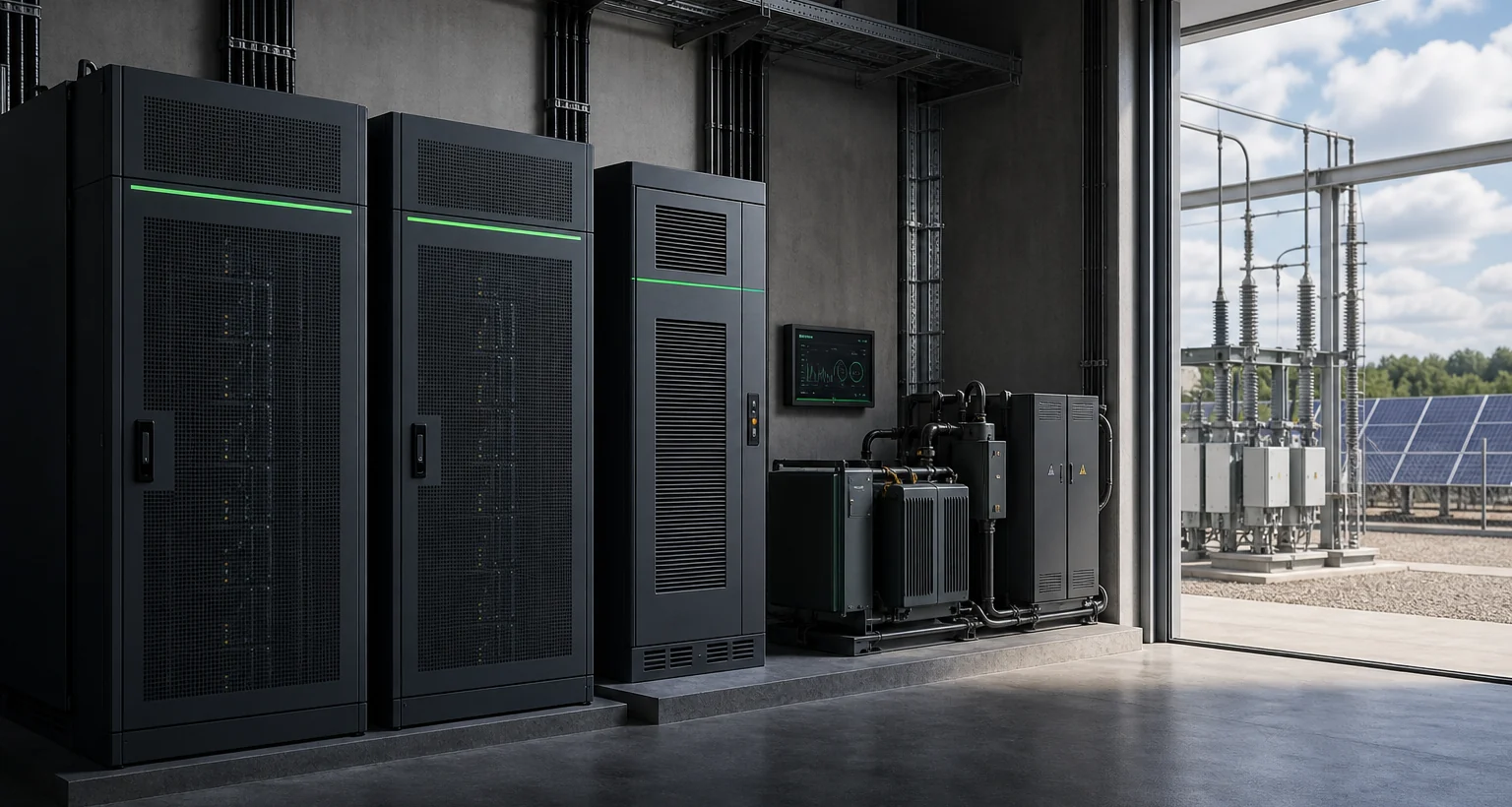
Product systems
C&I LFP Energy Storage Systems: Cabinet and Container Models.
Compare three LFP cabinets, three LFP containers and one LFP hybrid system, plus a separate sodium-ion DC cabinet. Use this page for model and specification comparison; use Solutions for operating applications.
Model comparison
Compare product specifications here. Define the application in Solutions.
This Product Systems page compares documented C&I LFP energy storage models by format, rated power, rated energy, chemistry and electrical boundary. If the open question is peak shaving, solar self-consumption, backup, EV charging or microgrid operation, start with the C&I energy storage Solutions page. Published values support early selection; the project model and supply scope still require written confirmation.
Outdoor cabinet ESS
Three integrated 400 V cabinet platforms.
All three use LFP batteries, integrated PCS/BMS/EMS, intelligent liquid cooling, fire protection, IP54 enclosure and C3 corrosion protection.
105 kW / 233 kWh
Compact all-in-one LFP cabinet for distributed C&I sites, peak shaving, demand control and capacity expansion.
- AC interface
- 400 V, 50/60 Hz
- Battery window
- 650–949 Vdc
- Charge rate
- 0.5C
- Enclosure
- IP54 / C3
- Cooling / fire
- Liquid / perfluorohexanone
- Footprint
- 1000 × 1400 × 2415 mm
125 kW / 261.2 kWh
Higher-energy cabinet using 314 Ah LFP cells with integrated PCS, BMS, EMS, liquid cooling and fire protection.
- AC interface
- 400 V, 50/60 Hz
- Battery window
- 650–949 Vdc
- Charge rate
- 0.5C
- Enclosure
- IP54 / C3
- Cooling / fire
- Liquid / perfluorohexanone
- Footprint
- 1000 × 1400 × 2415 mm
250 kW / 522.5 kWh
Dual-string, dual-PCS cabinet for sites needing more power and duration without moving to a container platform.
- AC interface
- 400 V, 50/60 Hz
- Battery window
- 650–949 Vdc
- Charge rate
- 0.5C
- Enclosure
- IP54 / C3
- Communications
- CAN / RS485 / Ethernet / 4G
- Footprint
- 1940 × 1504 × 2555 mm
Containerized BESS
Three project-scale power-to-energy ratios.
The 5.016 MWh platform can be configured for a 1.725 MW energy-led duty or a 2.5 MW two-hour-class duty. The project-side transformer and 10 kV connection remain part of the confirmed electrical boundary.
1.25 MW / 3.354 MWh
Nine-string LFP container paired with a 1.25 MW PCS step-up unit for a 10 kV project connection.
- Battery window
- 1040–1500 Vdc
- PCS AC side
- 690 V
- Charge rate
- ≤0.33C
- Enclosure
- IP54 / C3
- Cooling / fire
- Liquid / perfluorohexanone
- Base size
- 6058 × 2600 × 2896 mm
1.725 MW / 5.016 MWh
Longer-duration 12-string LFP system for sites prioritizing energy capacity and approximately three-hour duty.
- Battery window
- 1040–1500 Vdc
- PCS AC side
- 690 V
- Charge rate
- ≤0.33C
- Enclosure
- IP54 / C3
- Cooling / fire
- Liquid / perfluorohexanone
- Base size
- 6500 × 2700 × 2950 mm
2.5 MW / 5.016 MWh
Two-hour-class 12-string LFP system for higher-power discharge, peak management and larger project sites.
- Battery window
- 1040–1500 Vdc
- PCS AC side
- 690 V
- Charge rate
- ≤0.5C
- Enclosure
- IP54 / C3
- Cooling / fire
- Liquid / perfluorohexanone
- Base size
- 6500 × 2700 × 2950 mm
Special application systems
Hybrid microgrid and sodium-ion DC options.
These are not generic variants: one integrates PV, storage, transfer and diesel interfaces; the other is a DC-only sodium-ion cabinet for UPS backup architecture.
100 kW / 233 kWh
Integrated microgrid cabinet with 100 kW PCS, 100 kW DCDC/MPPT, 200 kW STS and an interface for an external diesel generator.
- PV interface
- 100 kW DCDC/MPPT
- Transfer switch
- 200 kW STS
- AC interface
- 380/400 V
- Enclosure
- IP54 / C3
- Communications
- CAN / RS485 / Ethernet / 4G
- Base size
- 1400 × 1400 × 2418 mm
219.24 kWh DC
Liquid-cooled sodium-ion DC cabinet designed around UPS backup applications for data-center and critical-power projects.
- Voltage window
- 216–504 Vdc
- Cell format
- 2.9 V / 175 Ah sodium-ion
- Charge rate
- ≤0.5C
- Enclosure
- IP54 / C3
- Cooling / fire
- Liquid / perfluorohexanone
- Base size
- 1350 × 1400 × 2665 mm
Portfolio comparison
Match format, chemistry and electrical boundary.
Use this table as a first filter, then validate the operating scenario with project data.
| Configuration | Format | Chemistry | Electrical boundary | Starting application |
|---|---|---|---|---|
| 105 kW / 233 kWh | Cabinet | LFP | 400 V AC | Peak shaving, demand control, expansion |
| 125 kW / 261.2 kWh | Cabinet | LFP | 400 V AC | Peak shaving, solar self-consumption, backup |
| 250 kW / 522.5 kWh | Cabinet | LFP | 400 V AC | Larger C&I loads and longer dispatch windows |
| 1.25 MW / 3.354 MWh | Container | LFP | 690 V PCS / 10 kV project side | Energy-led C&I and microgrid projects |
| 1.725 MW / 5.016 MWh | Container | LFP | 690 V PCS / 10 kV project side | Long-duration project duty |
| 2.5 MW / 5.016 MWh | Container | LFP | 690 V PCS / 10 kV project side | Higher-power two-hour duty |
| 100 kW / 233 kWh | Hybrid cabinet | LFP | 380/400 V AC | Weak-grid and PV-storage-diesel microgrid |
| 219.24 kWh DC | DC cabinet | Sodium-ion | 216–504 Vdc | Data-center UPS backup |
Inside the system
Five subsystems must work as one.
Make the evidence visible in the quotation and purchase scope before production begins.
Cell, pack and BMS
Cell chemistry, series/parallel arrangement, voltage window, current limits and multi-level battery management.
PCS and switching
Grid-connected and off-grid behavior, overload duty, STS/ATS where required, and the transformer interface.
EMS and communications
Dispatch logic, alarms, CAN/RS485/Ethernet links, remote monitoring and project protocol mapping.
Liquid cooling
Temperature control, ambient derating, condensation strategy, alarm handling and service access.
Detection and suppression
Pack- and enclosure-level detection, alarm, emergency stop, suppression and external fire-system interfaces.
Drawings and FAT evidence
Single-line, layout, communication map, serial records, startup tests, packing and commissioning boundary.
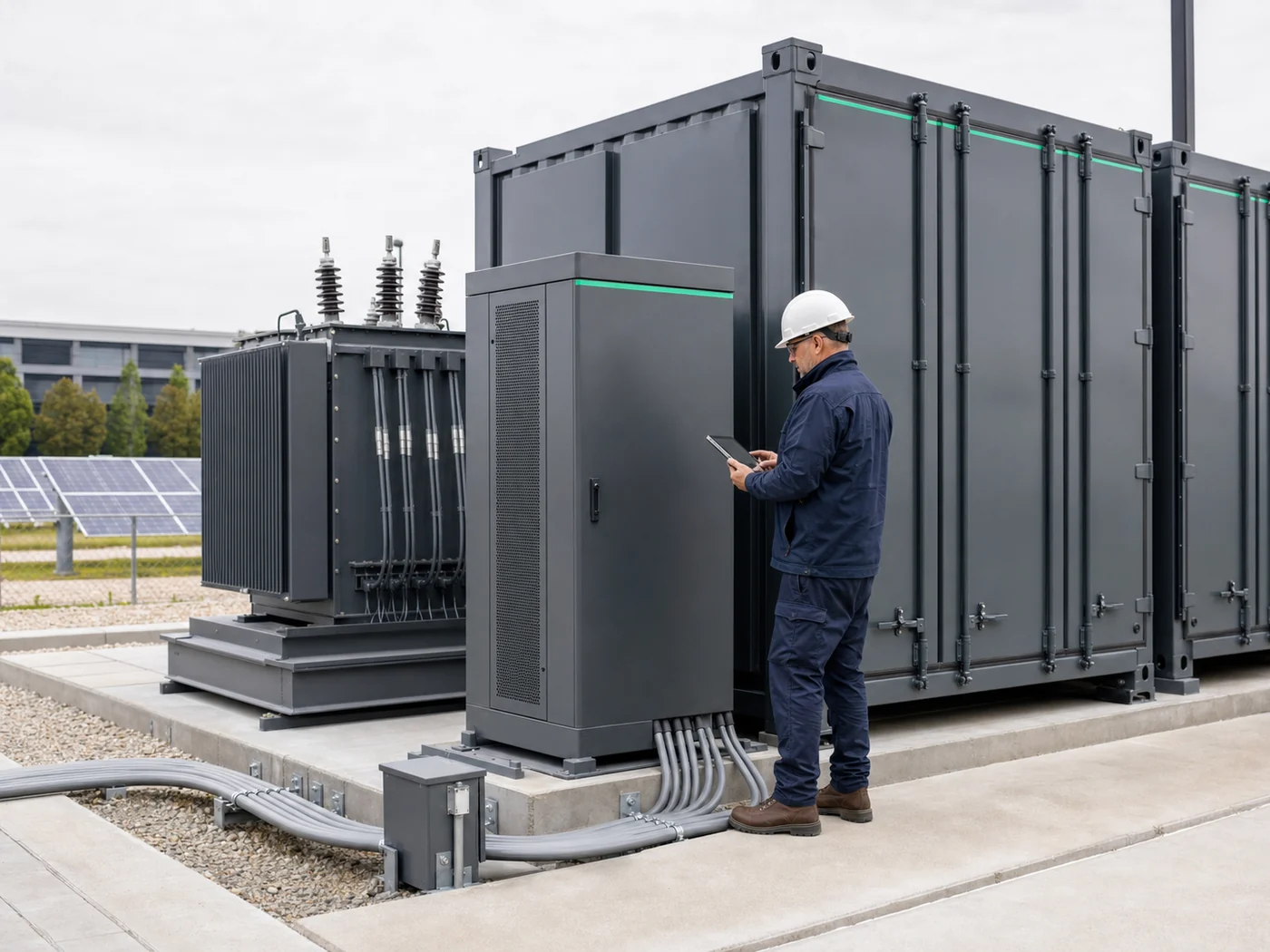
Configuration notice
A published rating is the start—not the finished design.
Grid voltage, transformer ratio, load type, backup transfer, ambient temperature, altitude, local code and shipment boundary can change the final configuration.
Product questions
Questions buyers ask when comparing C&I LFP systems.
Use these answers to narrow the model family, then approve the project-specific engineering and evidence.
What is a C&I LFP energy storage system?
It is a commercial or industrial battery energy storage system built with lithium iron phosphate cells. Depending on the architecture, the cabinet or container also integrates or interfaces with the BMS, PCS, EMS, thermal management, fire protection and project-side electrical equipment.
When should buyers choose a cabinet instead of a container?
A cabinet is a practical starting point for distributed 400 V C&I projects within the documented 105-250 kW range. A container is the starting point when the project needs MW-scale power, multiple battery strings or a PCS step-up interface. Final selection still depends on load, duration, voltage, site and service access.
Are all eight product systems LFP?
No. Seven listed configurations use LFP batteries: three integrated cabinets, three container systems and the 100 kW / 233 kWh hybrid cabinet. The 219.24 kWh DC cabinet is a separate sodium-ion system intended for UPS backup architecture.
Is rated kWh the same as usable energy?
No. Rated energy is the documented nameplate value. Project-usable energy depends on the approved SOC window, backup reserve, temperature and altitude derating, aging allowance, auxiliary consumption and the operating limits agreed for the battery and PCS.
Which documents should be approved before selecting a model?
Approve the project datasheet, single-line diagram, voltage and battery-window match, load and duty assumptions, layout and service clearances, responsibility matrix, destination compliance list, fire strategy, communication map and FAT plan before production.
Move from a verified configuration to a project-specific proposal.
Send the application, interval load data, PV profile, grid voltage, target power and energy, site conditions and delivery schedule. Published values are subject to final project confirmation.