
Energy-led containerized BESS
1.25 MW / 3.354 MWh Container BESSA nine-string LFP platform for medium-voltage project sites.
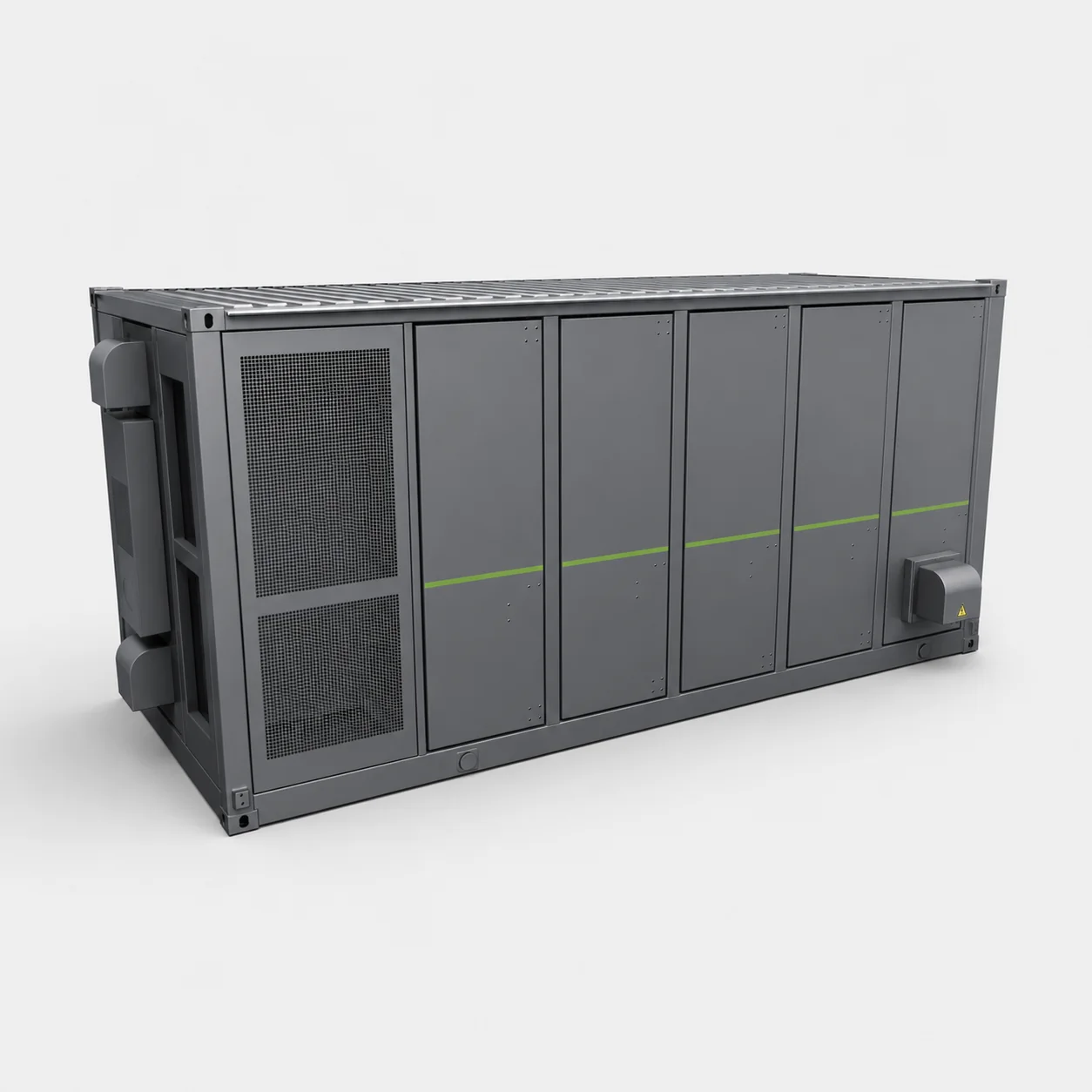
A 3.354 MWh liquid-cooled battery container paired with a 1.25 MW PCS step-up platform for projects targeting approximately 2.68 hours of rated duration.
Application fit
Start with the operating duty.
This container platform combines nine 416-series LFP strings at 1331.2 V nominal DC with a 1.25 MW, 690 V PCS stage. The documented architecture is paired with a step-up interface for a 10 kV project bus, subject to final transformer and protection design.
Open the RFQ input checklistIntegrated architecture
Four layers form the starting platform.
The commercial scope still needs a project responsibility matrix covering every external interface.
Battery container
Nine LFP strings arranged as 9P416S provide 3.354 MWh rated energy.
DC collection
High-voltage switching and DC isolation connect the battery strings to the PCS stage.
PCS and step-up
A 1.25 MW PCS operates at 690 V before the project transformer interface.
Plant controls
BMS, EMS, liquid cooling, alarms, fire systems and communications complete the container scope.
Technical specifications
Documented configuration data.
Values are taken from the supplied manufacturer specification. Final purchase, installation and acceptance must use the approved project datasheet, drawings and test documents.
| Group | Parameter | Documented value |
|---|---|---|
| Battery | Cell chemistry and format | LFP, 3.2 V / 280 Ah |
| Battery | Rated energy | 3354 kWh |
| Battery | Nominal DC voltage | 1331.2 V |
| Battery | DC voltage window | 1040-1500 V |
| Battery | String arrangement | 9P416S |
| PCS | Rated AC output | 1250 kW |
| PCS | PCS AC voltage | 690 V |
| PCS | Rated frequency | 50 Hz |
| Project | Target project-side interface | 10 kV through PCS step-up unit |
| System | Charge/discharge rate | Up to 0.33C |
| System | Base container dimensions | 6058 x 2600 x 2896 mm |
| System | Service/interface envelope | 6400 x 3300 x 2896 mm |
| System | Approximate weight | 35 t |
| System | Communications | RS485 / CAN / Ethernet |
| Environment | Altitude | Up to 2000 m |
| Environment | Enclosure | IP54; C3 corrosion protection |
| Environment | Operating temperature | -20 C to 55 C |
| Environment | Relative humidity | 0-95%, non-condensing |
| Thermal | Cooling | Intelligent liquid cooling |
| Safety | Fire suppression | Perfluorohexanone system |
Scope boundary
Separate product from project.
A comparable quotation makes included equipment and external responsibilities explicit.
Starting equipment scope
Documented platform
- Nine-string LFP battery container
- High-voltage DC collection and isolation
- BMS and EMS control layers
- Liquid-cooling and auxiliary systems
- Fire detection and suppression system
- Container internal cabling and communications
Project boundary
Confirm before quotation
- PCS and transformer supply split
- 10 kV switchgear and protection interface
- Grounding, auxiliary power and station service
- Foundation, crane access and transport route
- Plant-level EMS and SCADA protocol map
- Grid-code studies, FAT and site acceptance tests
Buyer questions
Resolve these points before ordering.
Use the answers to narrow the design; use the final project documents to release the order.
Is the 10 kV transformer included?
The specification describes a PCS step-up configuration, but supply responsibility for the PCS, transformer and 10 kV switchgear must be stated in the commercial scope.
Is this a standard 20-foot shipping container?
The documented base dimensions are 6058 x 2600 x 2896 mm. Transport classification, lifting points and route restrictions must be checked for the delivery country.
How much energy is usable?
3.354 MWh is rated energy. Usable energy depends on the approved SOC range, auxiliary consumption, temperature, ageing allowance and project warranty conditions.
What site data is required first?
Provide the load or dispatch profile, point-of-connection voltage, single-line diagram, fault level, ambient conditions, footprint, transport access and required grid studies.
Buyer engineering guides
Check the assumptions around this configuration.
Connect the product data to measured demand, electrical design, safety evidence and quotation scope.
Compare adjacent configurations
Continue the product review.
Compare power, duration, interface and project boundary before selecting a starting platform.
Product quick RFQ
Match this configuration to the real site.
Send the country, operating target and the first project requirements. The product title and source page are attached automatically.