
System selection
Small C&I Energy Storage: How to Choose a 100–500 kWh Battery Cabinet
Small C&I energy storage is usually a 100–500 kWh outdoor battery cabinet on a 400 V site supply. The right model depends on the power and usable energy your site actually needs, not on the largest kWh number.
The short answer
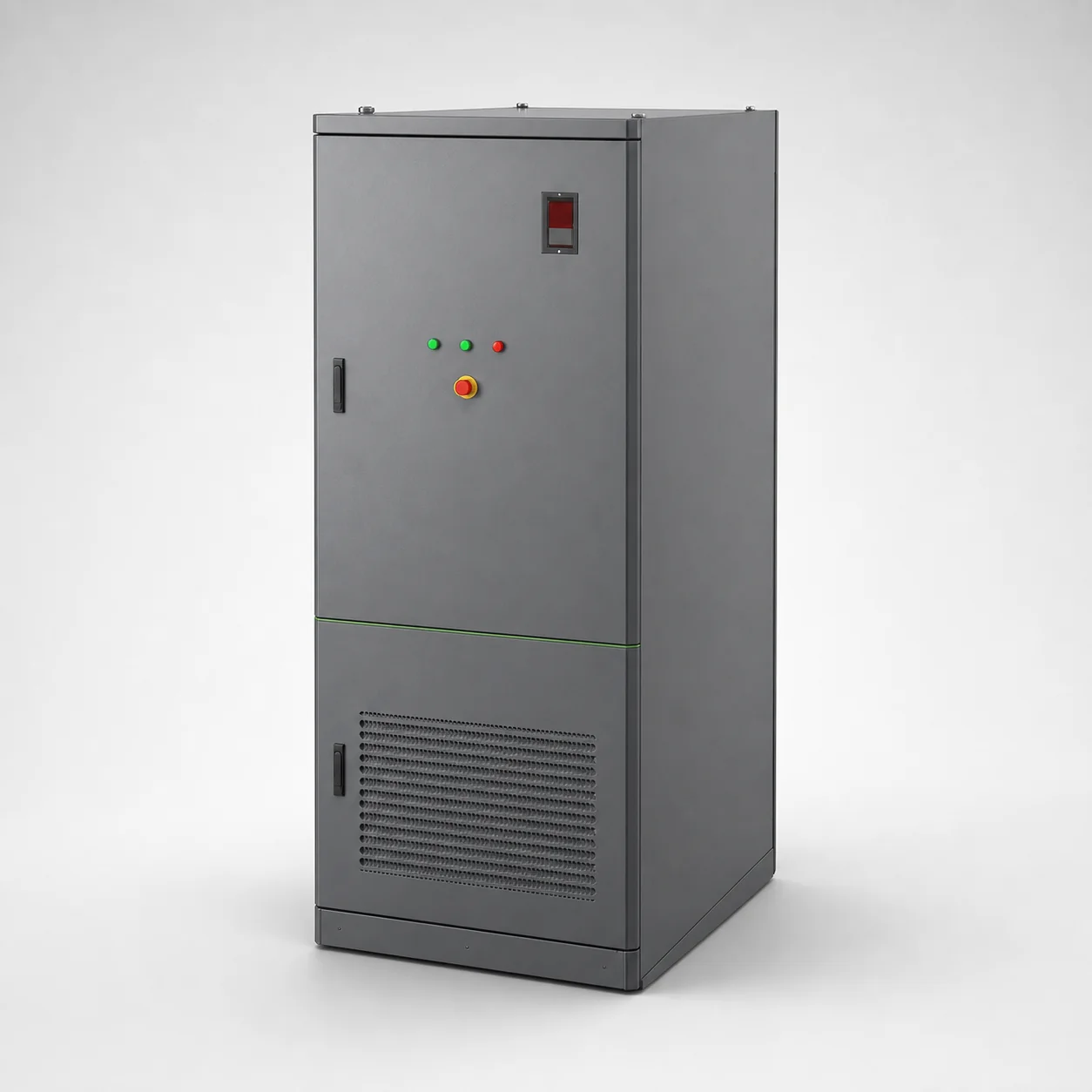
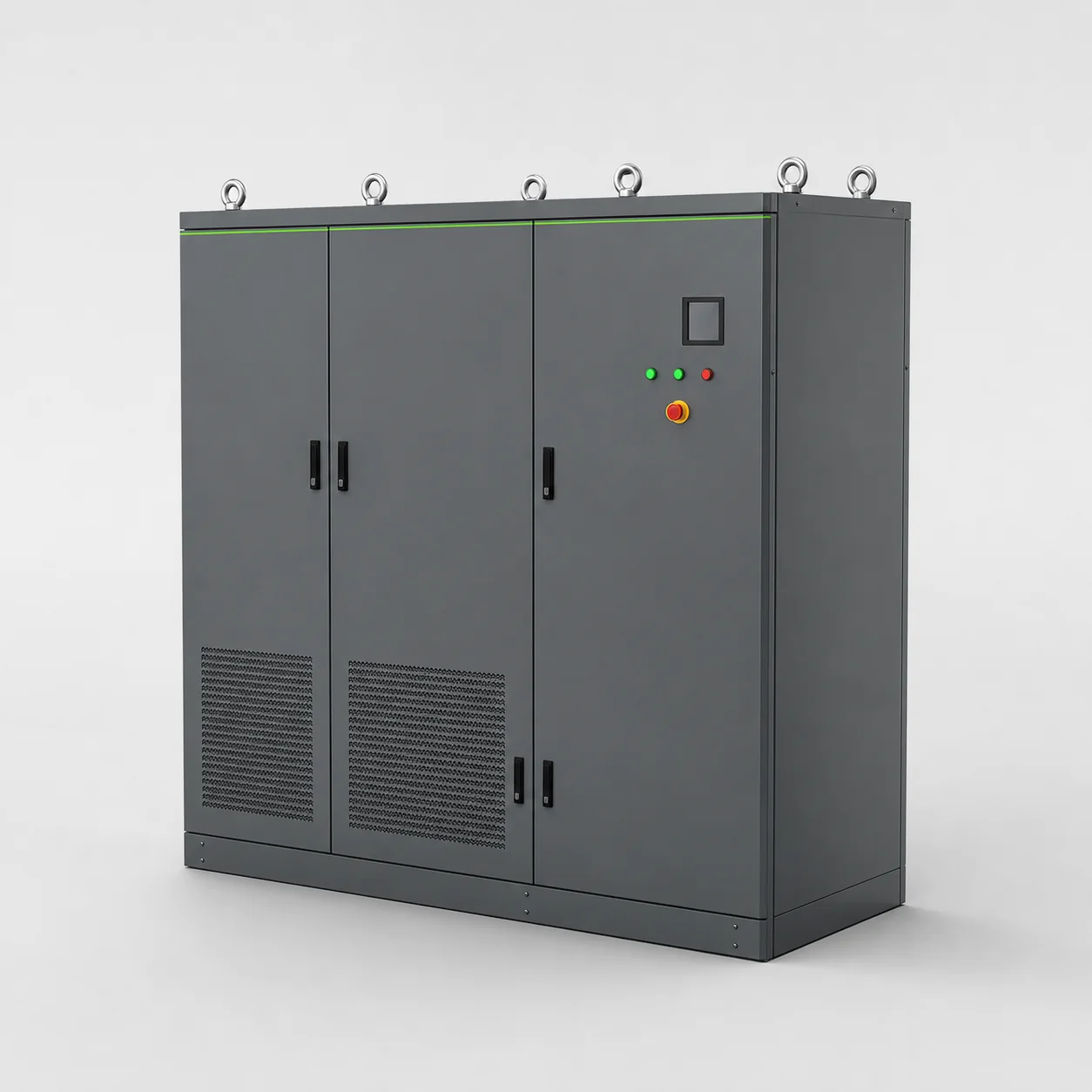
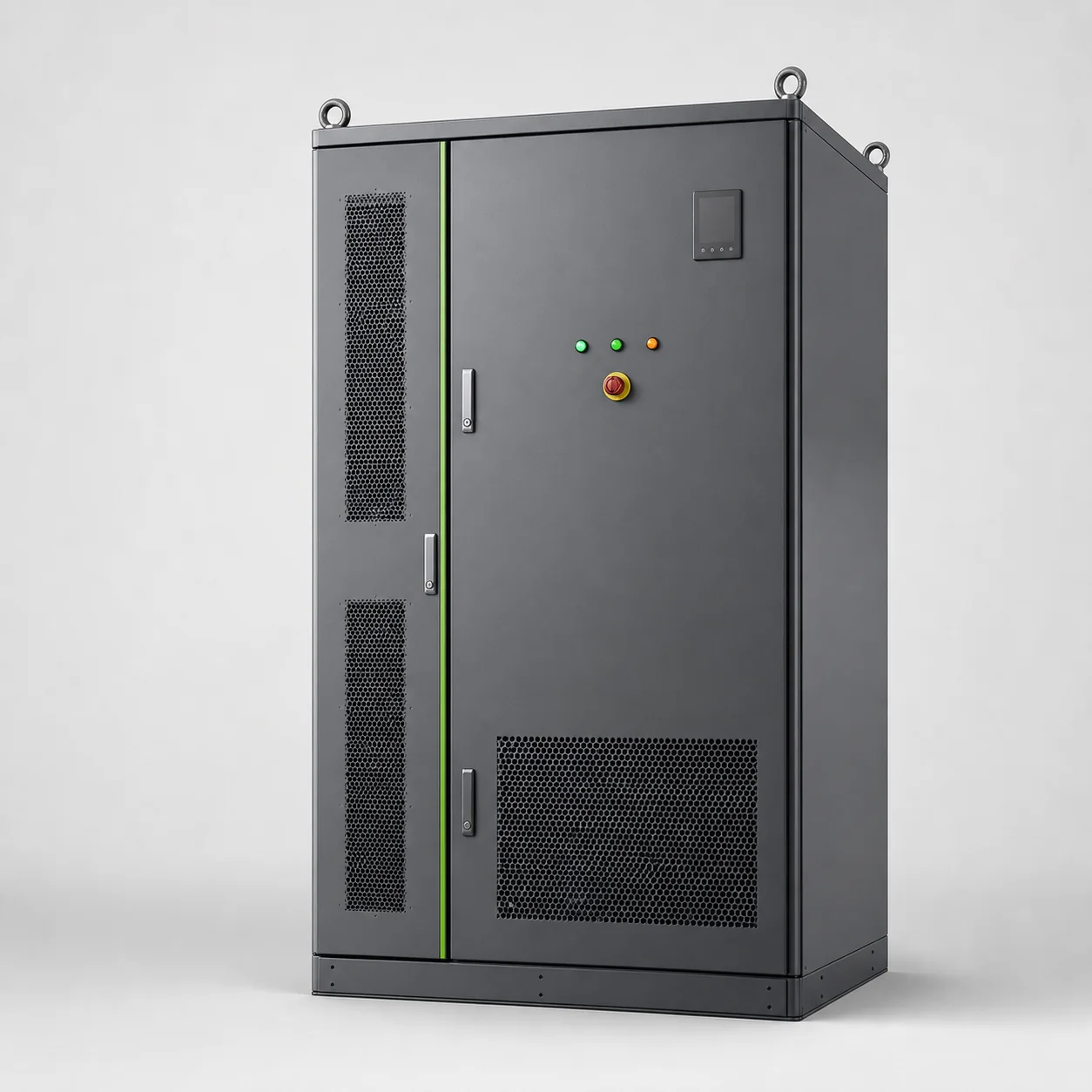
For small C&I energy storage in the 100–500 kWh range, start from the measured duty: the kW you need to shave or back up, and how long you need it. Then compare documented cabinets on rated power, rated energy and their roughly two-hour energy-to-power ratio. In the documented range, the 105 kW / 233 kWh and 125 kW / 261.2 kWh cabinets share one compact footprint, the 250 kW / 522.5 kWh cabinet doubles both power and energy, and the 100 kW / 233 kWh hybrid adds PV and diesel coordination. When the duty moves toward the megawatt range, compare container systems instead.
Step 01 · Duty
Define what the system must do
Small sites often buy storage for one main job. Name it first, because each job sizes power and energy differently.
Cut demand charges
Power follows the highest kW above the target demand; energy follows how long the peak lasts.
Keep critical loads running
Power follows the critical-load kW; energy follows the required backup time plus reserve.
Store daytime surplus
Charging follows PV surplus; discharge follows evening load and export rules.
For demand reduction, use the peak shaving sizing guide. To give suppliers the right data, follow the BESS load profile checklist.
Step 02 · Units
Separate kW from kWh before comparing cabinets
Search terms such as “100 kWh cabinet” mix two different ratings. A cabinet is described by both its PCS power (kW) and its battery energy (kWh). A 100 kW system may store far more than 100 kWh, and rated energy is not the same as usable energy at your site.
Write the requirement as: continuous AC power in kW, usable AC energy in kWh at that power, and the operating window. The 100 kW vs 100 kWh guide explains the difference and the usable-energy corrections.
Step 03 · Platforms
Compare documented 100–500 kWh platforms
All four documented platforms below use LFP cells, an 832 V nominal battery string, a 400 V AC interface, a 0.5C rating, liquid cooling, an IP54 enclosure and perfluorohexanone fire suppression. They differ in power, energy, footprint and system role.
| Platform | Power / energy | Approx. ratio | Footprint and weight | Best fit |
|---|---|---|---|---|
| Compact cabinet | 105 kW / 233 kWh, 280 Ah cells | 2.2 h | 1000 x 1400 mm base, approx. 2.7 t | Distributed sites with a modest peak or backup load |
| Higher-energy cabinet | 125 kW / 261.2 kWh, 314 Ah cells | 2.1 h | Same 1000 x 1400 mm base, approx. 2.7 t | More power and energy without a larger footprint |
| Dual-string cabinet | 250 kW / 522.5 kWh, two 125 kW PCS blocks | 2.1 h | 1940 x 1504 mm base, approx. 5.4 t | Larger commercial loads before moving to a container |
| PV-storage-diesel hybrid | 100 kW / 233 kWh with MPPT/DCDC and STS | 2.3 h | 1400 x 1400 mm base, approx. 3 t | Weak-grid or off-grid sites combining PV and a generator |
Ratios are rated energy divided by rated power and are screening references only. Usable duration depends on SOC limits, losses, auxiliary loads, temperature and reserve, which must be confirmed in the project offer.
Step 04 · Site
Check the site interface early
Small systems are often installed at sites with limited space, a single low-voltage supply and no dedicated electrical team. Confirm these points before choosing a model:
400 V three-phase
The documented cabinets connect at 400 V. Other site voltages need a transformer or a different design; see the 400 V vs 690 V design guide.
Footprint and access
Plan the full envelope, service space, foundation and lifting route using the installation requirements checklist.
Meter and EMS
Confirm the meter location, CT supply, network and how the EMS will read site demand and PV output.
Step 05 · Scale
Know when to step up
A small site can grow. Decide early whether the system may need to expand, because the expansion path affects layout, cabling and controls.
| Situation | Typical next step | What to confirm |
|---|---|---|
| Need slightly more than 233 kWh in the same space | Move from the 105 kW to the 125 kW cabinet | Measured peak and backup load justify the larger PCS |
| Need roughly double power and energy | Use the 250 kW / 522.5 kWh cabinet | Larger foundation, 400 A output and access for a 5.4 t unit |
| Need more than one large cabinet | Several cabinets or a container system | Supplier-approved parallel architecture, controls and protection |
| Duty moves toward the megawatt range | Container BESS | MV connection, transformer and crane access |
The cabinet vs container BESS guide compares the two formats in more detail. For UPS backup rather than grid-connected storage, the documented 219 kWh sodium-ion UPS battery cabinet is a DC battery cabinet that connects to an external UPS.
Step 06 · Quotation
Ask for a quote on one clear basis
Send every supplier the same inputs: interval load data, the main duty, required power and usable energy, site voltage, space and access limits, PV or generator details and the documents you need. Ask each offer to state rated and usable energy, included equipment and exclusions.
Use the industrial BESS RFQ scope to prepare the request, or browse all documented product systems.
Buyer questions
Frequently asked questions
What counts as small C&I energy storage?
There is no formal definition, but in practice small commercial and industrial energy storage usually means single-site systems from roughly 100 kWh to 500 kWh of battery energy and about 100 kW to 250 kW of power. These are typically delivered as self-contained outdoor battery cabinets connected to a 400 V three-phase site supply, rather than as megawatt-scale containers.
Is a 100 kWh battery cabinet the same as a 100 kW cabinet?
No. kW is the PCS power rating and kWh is the stored battery energy. For example, the documented 100 kW / 233 kWh PV-storage-diesel system delivers up to 100 kW of rated AC power but stores 233 kWh. Specify both values, plus the usable energy needed at the required power.
How do I choose between a 233 kWh and a 261 kWh cabinet?
Both documented cabinets share the same 1000 x 1400 mm base footprint and 400 V interface. The 105 kW / 233 kWh model uses 280 Ah LFP cells, while the 125 kW / 261.2 kWh model uses 314 Ah cells and a larger PCS. Choose the 125 kW model when the measured peak shave or backup load needs the extra power and energy in the same footprint.
When should a small C&I site move from a cabinet to a container?
Consider a container when the required power moves toward the megawatt range or the usable energy clearly exceeds what one large cabinet provides. Several cabinets can sometimes be combined, but only when the supplier confirms the parallel architecture, controls, protection and site layout.
Can a small C&I battery cabinet work with solar and a diesel generator?
A standard cabinet can store solar energy when the PV and controls are integrated at site level. Where PV, storage, transfer switching and diesel coordination are needed in one package, a hybrid platform such as the documented 100 kW / 233 kWh PV-storage-diesel system includes MPPT/DCDC, STS and a coordinated EMS, while the PV array and generator remain project interfaces.
Match the cabinet to the duty.
Power, usable energy, site interface and growth plan decide the right 100–500 kWh system.